Remote Work and Travel: Complete Guide to Working While Exploring the World
Master the digital nomad lifestyle. Learn how to balance remote work with travel, find best destinations, manage productivity, and build the life you've always wanted.
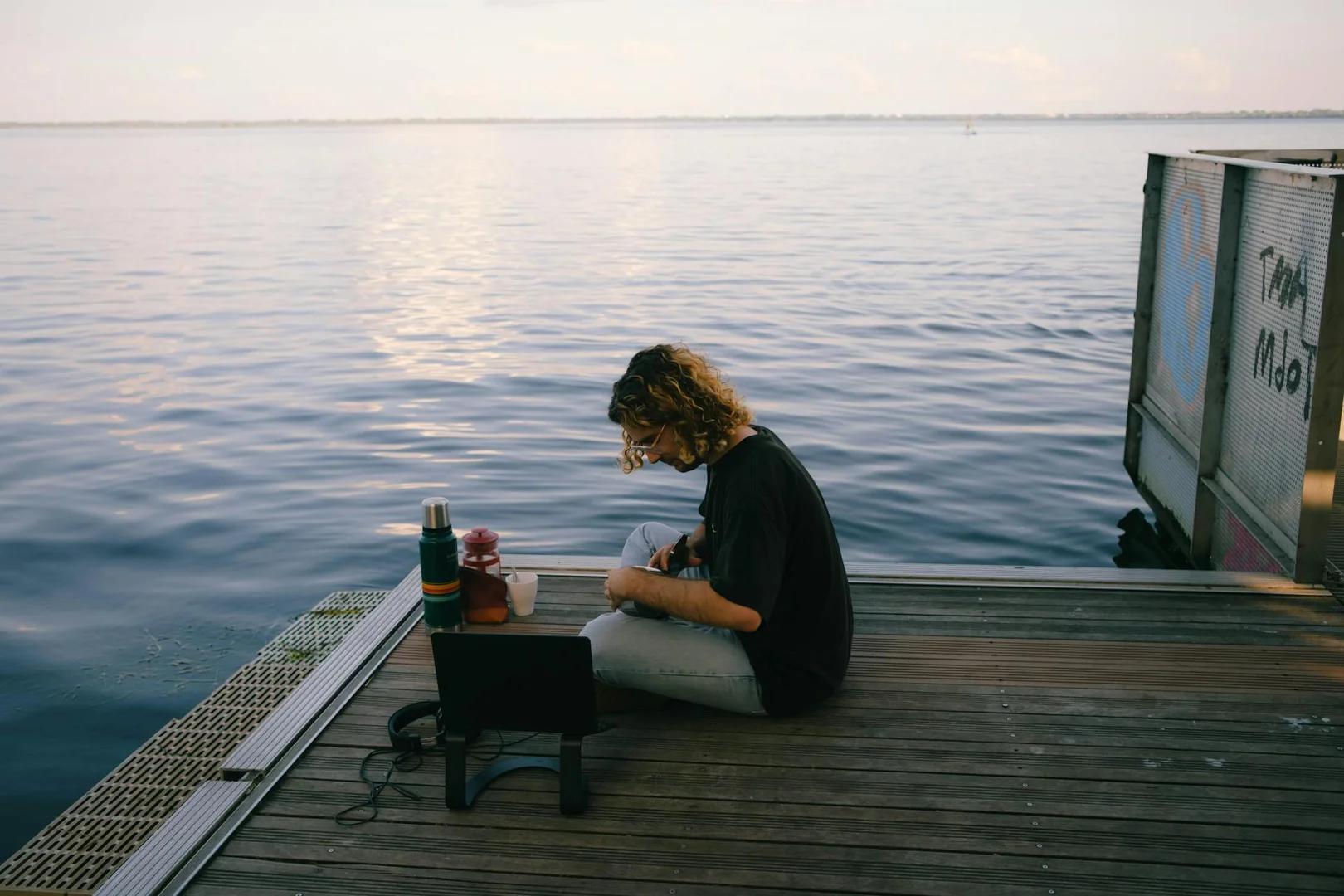
The dream: Working from a cafe in Bali, answering emails from a beachside hotel in Mexico, joining Zoom calls with a European cityscape backdrop.
Remote work has transformed this fantasy into reality for millions. But successfully combining work and travel requires strategy, discipline, and the right systems.
This complete guide will show you exactly how to make it work.
The Remote Work Revolution
Who Can Work Remotely?
Common Remote Jobs:
Tech:
- Software developers
- UX/UI designers
- Data analysts
- IT support
- DevOps engineers
Creative:
- Graphic designers
- Writers and editors
- Marketers
- Social media managers
- Video editors
Business:
- Project managers
- Customer success
- Sales (B2B especially)
- Consultants
- Accountants
Education:
- Online teachers
- Course creators
- Tutors
Support:
- Virtual assistants
- Customer service
- Community managers
Other:
- Translators
- Researchers
- Recruiters
Reality Check: If your job requires physical presence (surgeon, mechanic, bartender), remote work requires career change.
Finding Remote Work
For Current Employees
Negotiating Remote Work:
Step 1: Build the Case
- Document your productivity metrics
- Research company remote work policy
- Identify potential concerns (address them proactively)
- Suggest trial period
Step 2: The Proposal
- Start with part-time remote
- Offer regular check-ins
- Show clear communication plan
- Emphasize productivity focus
Step 3: Trial Period
- Over-communicate
- Maintain/improve results
- Document successes
- After 3-6 months, propose full remote
If Declined: Start looking for remote-first companies.
Finding New Remote Jobs
Job Boards:
- Remote.co – Curated remote positions
- We Work Remotely – Tech and creative
- FlexJobs – Vetted remote jobs ($$$)
- Remote OK – Tech focus
- Dynamite Jobs – Remote-first companies
Company Databases:
- RemoteFirst.com – Companies that are remote-first
- Himalayas – Remote job board + company database
Traditional Platforms:
- LinkedIn (filter: Remote)
- Indeed ("remote" + job title)
- AngelList (startups often remote-friendly)
Pro Tip: Target companies that are "remote-first" not "remote-friendly." Huge culture difference.
Choosing Destinations
Best Cities for Digital Nomads
Criteria:
- Reliable internet (15+ Mbps)
- Coworking spaces
- Affordable cost of living
- Time zone compatibility (with clients/team)
- Visa-friendly
- Digital nomad community
- Quality of life
Top Destinations 2026
1. Lisbon, Portugal 🇵🇹
- Timezone: GMT (great for US/Asia overlap)
- Internet: Excellent
- Cost: $1,500-2,500/month
- Visa: 90 days Schengen + digital nomad visa available
- Coworking: Abundant
- Why: Perfect weather, startup scene, English common
2. Chiang Mai, Thailand 🇹🇭
- Timezone: GMT+7 (good for Asia/Australia)
- Internet: Very good
- Cost: $800-1,500/month
- Visa: Easy extensions, digital nomad visa coming
- Coworking: Punspace, Mana, CAMP
- Why: Ultra-affordable, huge nomad community
3. Medellín, Colombia 🇨🇴
- Timezone: GMT-5 (perfect for US)
- Internet: Good
- Cost: $1,000-1,800/month
- Visa: 90 days, easily extendable
- Coworking: Selina, Atom House
- Why: Eternal spring, affordable, great food
4. Bali, Indonesia (Canggu) 🇮🇩
- Timezone: GMT+8 (challenging for Europe/US)
- Internet: Improving (get backup SIM)
- Cost: $1,200-2,200/month
- Visa: 30-60 days, extendable
- Coworking: Dojo, Outpost, Tribal
- Why: Beach lifestyle, wellness, social scene
5. Mexico City, Mexico 🇲🇽
- Timezone: GMT-6 (perfect for US)
- Internet: Excellent
- Cost: $1,200-2,000/month
- Visa: 180 days free
- Coworking: WeWork, Impact Hub
- Why: Culture, food, timezone, affordability
Other Top Choices:
- Budapest, Hungary (affordable Europe)
- Playa del Carmen, Mexico (beach + US timezone)
- Porto, Portugal (cheaper than Lisbon)
- Tbilisi, Georgia (ultra cheap, digital nomad visa)
- Dubai, UAE (expensive but excellent infrastructure)
Practical Logistics
Internet Requirements
Minimum Speeds:
- Video calls: 5 Mbps upload, 10 Mbps download
- Regular work: 10+ Mbps
- Ideal: 25+ Mbps
Testing Before Booking:
- Speedtest.net results in listing?
- Reviews mentioning WiFi?
- Video call with host to test?
Backup Plans:
- Local SIM with data (test in first days)
- Nearby coworking space membership
- Cafe with good WiFi as backup
- Portable WiFi hotspot
Pro Strategy: Have 3 internet options (accommodation, coworking, mobile) so if one fails, work continues.
Time Zones
The Challenge: Working with US clients while in Asia means midnight meetings.
Strategies:
Option 1: Overlap Hours Choose destinations with some overlap.
Example: US East Coast (EST) + Lisbon (GMT)
- US 9 AM = Lisbon 2 PM ✅
- Overlap: 9 AM-5 PM EST = 2 PM-10 PM Lisbon
Option 2: Async Communication
- Loom videos instead of meetings
- Detailed written updates
- Slack/email primary communication
- Rare synchronous calls
Option 3: Adjust Your Schedule
- Work evenings to match team hours
- Free mornings for exploration
- Afternoon rest
- Work 6 PM-2 AM
Best Practice: Communicate your availability clearly, set expectations early.
Accommodation
Types:
1. Apartments (1-3 Months)
- Airbnb (monthly discounts)
- Local rental sites
- Facebook groups ("[City] Digital Nomads")
Essentials:
- Dedicated workspace
- Good chair (or buy one)
- Strong WiFi
- Quiet environment
Cost: $500-1,500/month depending on destination.
2. Coliving Spaces
- All-inclusive (WiFi, cleaning, community)
- Coworking spaces included
- Social events
- Higher cost but convenience
Examples:
- Selina (global)
- Outsite (US, Europe, South America)
- Sun and Co (Spain)
- Anceu (Coliving network)
Cost: $800-2,000/month.
3. Hostels (Short-term)
- Private rooms for work
- Social atmosphere
- Cheap
- Not ideal long-term
Visas
Tourist Visas: Most countries: 30-90 days without special visa.
Extensions:
- Border runs (leave and re-enter)
- Visa extensions at immigration
- Limited by country
Digital Nomad Visas (Growing Trend):
| Country | Duration | Cost | Requirements |
|---|---|---|---|
| Portugal | 1 year | €300 | Income proof |
| Estonia | 1 year | €100 | Remote work proof |
| Croatia | 1 year | €100 | Proof of income |
| Spain | 3 years | €80 | Income €2,000+/month |
| Mexico | 4 years | $400 | Bank balance |
| Costa Rica | 2 years | Free | $3,000/month income |
| Thailand | 5 years | $280 | $80k+ assets |
Visa Strategy:
- Short trips (1-3 months): Tourist visas fine
- Long-term (6+ months): Get digital nomad visa
- Rotating countries: Stay under tourist visa limits
Productivity While Traveling
Creating Routine
The Trap: "I'm traveling, I'll work when I feel like it." Result: Missed deadlines, stressed, burnt out.
The Solution: Treat it like office work, with boundaries.
Sample Schedule:
Morning Routine (7 AM - 9 AM):
- Wake up, exercise, breakfast
- Review today's goals
Deep Work Block 1 (9 AM - 1 PM):
- Most important tasks
- No meetings if possible
- Phone on silent
Lunch + Exploration (1 PM - 3 PM):
- Eat lunch
- Walk around neighborhood
- Recharge
Work Block 2 (3 PM - 6 PM):
- Meetings
- Emails
- Collaborative work
- Lighter tasks
Evening (6 PM +):
- No work
- Explore city
- Social events
- Relax
Adaptation: Adjust for timezone, but keep structure.
Workspace Setup
Coworking Spaces:
Benefits:
- Reliable internet
- Ergonomic setup
- Social interaction
- Professional environment
- Networking
Costs:
- Day pass: $10-25
- Monthly: $100-250
Top Global Networks:
- WeWork
- Spaces
- Selina
- Impact Hub
Local Coworking: Usually cheaper, more community feel.
When to Use:
- Important calls/meetings
- Need focus
- Home WiFi issues
- Combat loneliness
Cafes:
Pros:
- Change of scenery
- Affordable ($5 coffee = 3-4 hours)
- Local atmosphere
Cons:
- Noise
- Unreliable WiFi
- Awkward for calls
- Power outlets limited
Cafe Etiquette:
- Buy something every 2-3 hours
- Don't hog outlets during rush
- Use headphones
- Be ready to leave if crowded
Best For: Light work, emails, writing. Not calls or deep focus.
Accommodation:
Pros:
- Free
- Comfortable
- Private
- Flexible schedule
Cons:
- Isolation
- Distractions
- Ergonomics often poor
Making It Work:
- Dedicated workspace
- Get out daily (avoid cabin fever)
- Proper chair (even if you buy cheap one)
Tools and Apps
Essential Stack:
Communication:
- Slack (team chat)
- Zoom (video calls)
- Google Meet (backup)
- Loom (async video)
Productivity:
- Notion (everything)
- Todoist (task management)
- RescueTime (time tracking)
- Freedom (distraction blocking)
Time Zones:
- World Clock (native iOS/Android)
- Every Time Zone (website)
- Timezone.io (team time zones)
Files:
- Google Drive (collaboration)
- Dropbox (reliable sync)
- External hard drive (backup)
Finance:
- Wise (multi-currency)
- Revolut (backup)
- Wave/QuickBooks (invoicing)
Security:
- NordVPN (public WiFi safety)
- 1Password (password manager)
- 2FA on everything
Balancing Work and Travel
The Golden Rule
You're Not on Vacation
Mistake: Treating it like extended vacation. Result: Work suffers, guilt, stress.
Reality: This is your life. Work is work. Travel is lifestyle.
Mindset Shift:
- Weekdays: Focused work
- Evenings: Exploration
- Weekends: Adventures
- Long-term sustainable
Making Time for Exploration
Strategies:
1. Location, Location, Location Live in walkable neighborhoods. Explore during lunch/evening without needing transport.
2. Weekends Count Use weekends for big excursions, day trips, adventures.
3. Extended Stays 1-3 months per location means you don't rush. See things gradually.
4. Slow Travel Fewer destinations, deeper experiences.
5. Work Intensity Cycles
- Busy month: Minimal exploration, stay in cheaper place
- Light month: More travel, splurge on experience
Financial Planning
Cost Breakdown
Monthly Budget: Moderate Digital Nomad
| Category | Cost |
|---|---|
| Accommodation | $800 |
| Food | $400 |
| Coworking | $150 |
| Transport (local) | $100 |
| Phone/Internet | $50 |
| Entertainment | $200 |
| Health Insurance | $150 |
| Total | $1,850/month |
Annual: $22,200
Add:
- Flights between destinations: $3,000/year
- Emergency fund: $5,000
- Total Annual: ~$30,000
Income Needed: $35,000-40,000 to live comfortably, save a bit, handle emergencies.
Taxes
Complex Topic: Consult tax professional. General principles:
US Citizens:
- Pay US taxes regardless of location
- Foreign Earned Income Exclusion (up to ~$120,000 exempt if qualify)
- Still pay self-employment tax
Other Countries:
- Vary widely
- Some tax based on residency
- Some based on citizenship
- Tax treaties may apply
Common Approach:
- Maintain tax residency in low-tax location
- Spend less than 183 days/year in any one country
- Keep detailed records
Get Professional Help: This is worth paying an expert.
Health and Wellness
Health Insurance
Options:
1. SafetyWing ($45-175/month)
- Month-to-month
- Coverage worldwide (except home country mostly)
- Buy while traveling
- Popular with nomads
2. World Nomads ($80-300/month)
- Comprehensive coverage
- Adventure sports covered
- Buy before or during travel
3. Cigna Global ($200-500/month)
- Premium option
- Full coverage including home country
- High limits
4. GeoBlue ($100-200/month)
- US citizens abroad
- Good for longer trips
Staying Healthy
Challenges:
- Constant environment changes
- Irregular sleep (time zones)
- Eating out frequently
- Stress of work + logistics
Solutions:
Routine:
- Consistent sleep schedule
- Regular exercise (gyms, yoga, running)
- Cook some meals (nutrition + savings)
Mental Health:
- Meditation (Headspace, Calm)
- Regular video calls with friends/family
- Therapy (online works great: BetterHelp)
- Join communities
Avoid Burnout:
- Take real vacations (no laptop)
- Rest days
- Pace yourself
- Say no sometimes
Building Community
Combating Loneliness
The Reality: Remote work + new cities every few months = potential isolation.
Finding Your People:
1. Coworking Spaces
- Built-in community
- Regular faces
- Organized social events
- Skill sharing
2. Facebook Groups
- "[City] Digital Nomads"
- "Remote Workers in [City]"
- Join events and meetups
3. Meetup.com
- Language exchanges
- Hiking groups
- Entrepreneur meetups
- Interest-based
4. miigo
- Find travel companions
- Connect with remote workers in your destination
- Join group trips
- Weekend adventures with compatible people
5. Local Experiences
- Classes (cooking, language, dance)
- Sports/fitness groups
- Volunteer opportunities
Maintaining Relationships
Long-Distance Challenges:
- Different time zones from friends/family
- Missing important events
- Feeling disconnected
Strategies:
Regular Check-ins:
- Weekly video calls with close friends/family
- Share photos/updates
- Virtual coffee dates
Visits:
- Host friends in cool locations
- Return home occasionally (holidays, special events)
- Meet up in third destinations
Quality Over Quantity:
- Deep conversations > frequent small talk
- Intentional connection time
Legal and Administrative
Address Requirements
Many Services Need Address:
- Bank accounts
- Credit cards
- Company registration (if freelance)
- Official mail
Solutions:
1. Family/Friend Address Simplest if trusted person can forward mail.
2. Virtual Mailbox
- Services scan and forward mail
- US: Traveling Mailbox, Anytime Mailbox
- Costs: $10-30/month
3. Professional Address
- Registered agent services
- For LLC/business needs
Banking
Multi-Currency Accounts:
- Wise (holds 50+ currencies)
- Revolut (similar)
Traditional Bank: Keep one for certain needs (mortgages, large transactions).
Credit Cards:
- No foreign transaction fees essential
- Chase Sapphire (travel rewards)
- Capital One Venture
- Charles Schwab debit (ATM fee refunds)
Sample Schedules
Productive Nomad Week
Monday-Thursday:
- 7 AM: Wake, exercise
- 8 AM: Breakfast, plan day
- 9 AM-1 PM: Deep work (coworking)
- 1-3 PM: Lunch, walk
- 3-6 PM: Meetings, emails (cafe or home)
- 6 PM+: Explore neighborhood, dinner, relax
Friday:
- Morning: Wrap up week's work
- Afternoon: Half-day, explore
- Evening: Social events
Saturday:
- Day trip or major city exploration
- No work (emergency only)
Sunday:
- Rest/reset
- Meal prep for week
- Light planning for Monday
Common Mistakes
1. Working from Paradise
Mistake: Booking beachfront villa expecting productivity. Reality: Distracting, often poor WiFi, expensive. Fix: Separate work and play locations.
2. No Routine
Mistake: "I'll work whenever." Reality: Nothing gets done, constant stress. Fix: Structure, even if flexible.
3. Isolation
Mistake: Only working from home. Reality: Lonely, depressed. Fix: Coworking, social events, use miigo.
4. Moving Too Fast
Mistake: New city every week. Reality: Exhausted, can't find rhythm. Fix: Minimum 1 month per location.
5. Ignoring Time Zones
Mistake: Booking midnight meetings regularly. Reality: Burnout, health issues. Fix: Communicate boundaries, choose compatible locations.
6. No Emergency Fund
Mistake: Living paycheck to paycheck while abroad. Reality: One emergency ruins everything. Fix: $5,000+ safety net always.
Is This For You?
Honest Self-Assessment
This Lifestyle Works If You:
- Are self-motivated
- Handle uncertainty well
- Don't need much physical stuff
- Enjoy new experiences
- Can work independently
- Are flexible
This Might Not Work If You:
- Need routine and familiarity
- Prefer stability
- Have strong local community ties
- Work requires physical equipment/office
- Struggle with self-discipline
Try Before Committing:
- Take 1-month trial
- Keep your apartment/job
- Test the lifestyle
- Decide after experiencing it
Final Thoughts
Remote work and travel isn't about perpetual vacation or escaping responsibility. It's about designing a life that values experiences, flexibility, and freedom while maintaining professional excellence.
The best remote work travelers:
- Take their work seriously
- Build sustainable routines
- Invest in community
- Balance exploration with productivity
- Treat it as a lifestyle, not a temporary adventure
If you can find that balance, this lifestyle offers unparalleled opportunities for growth, adventure, and fulfillment.
Ready to start your remote work journey? Join miigo to connect with digital nomads in your target destinations, find coworking buddies, and build your global community while you work from anywhere.
Digital nomads: What's your biggest challenge with remote work while traveling? Share your tips and struggles!
Ready to Find Your Travel Buddy?
Join miigo and connect with like-minded travelers for your next adventure.
Related Articles

Best Travel Apps for Digital Nomads 2026: The Ultimate Toolkit
Discover the essential travel apps every digital nomad needs in 2026. From finding travel buddies to managing remote work, budgeting, and staying connected worldwide.

Group Travel in 2026: The Complete Guide
Plan unforgettable group travel in 2026: how to organize a group trip, choose destinations, and find people to travel with — start on the miigo app.
Find a Travel Buddy in 2026: The Complete Guide
Find a travel buddy the smart way. Learn where to look, how to vet a partner, and stay safe. Build your buddy profile on miigo and start matching.